

Authors: Domenico Prisa , Aftab Jamal, Damiano Spagnuolo
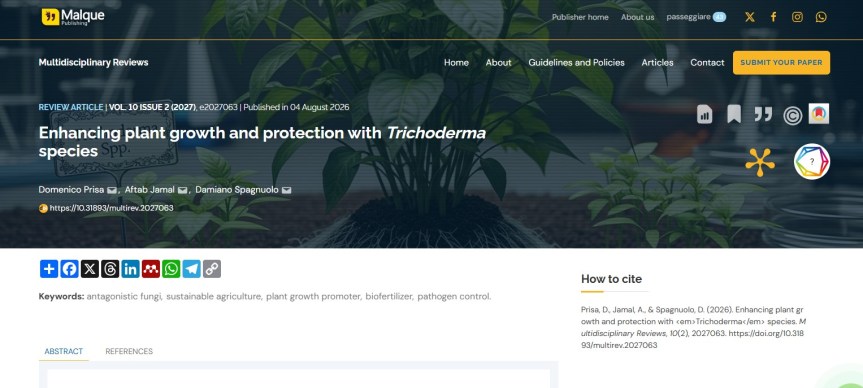
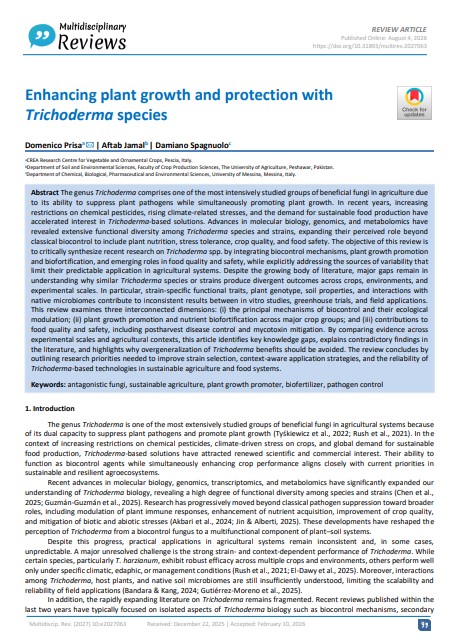
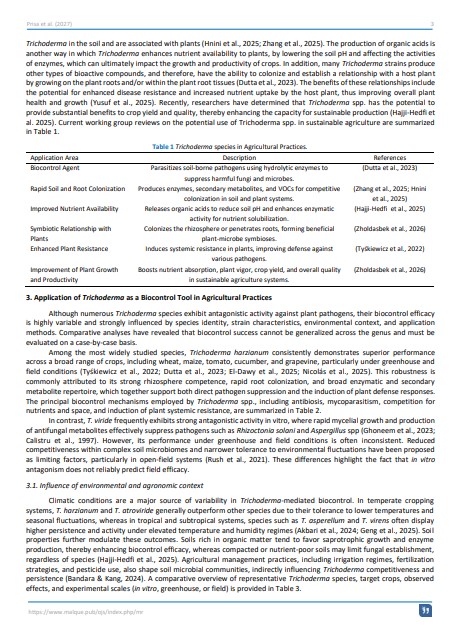
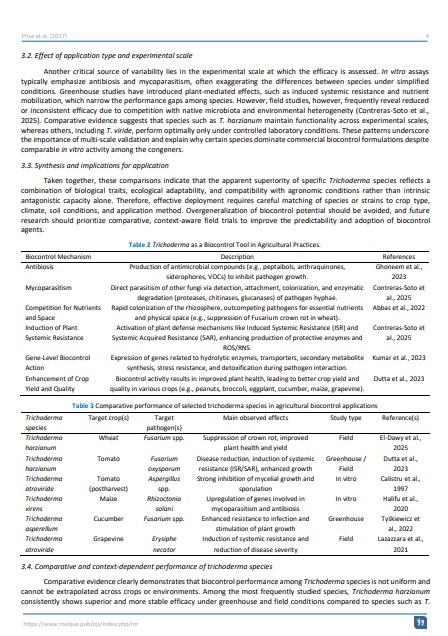
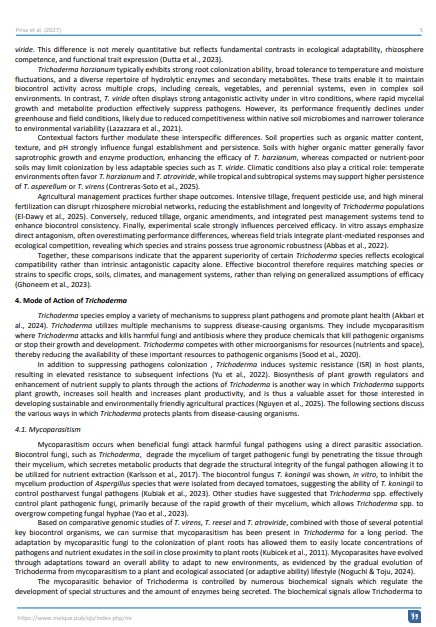
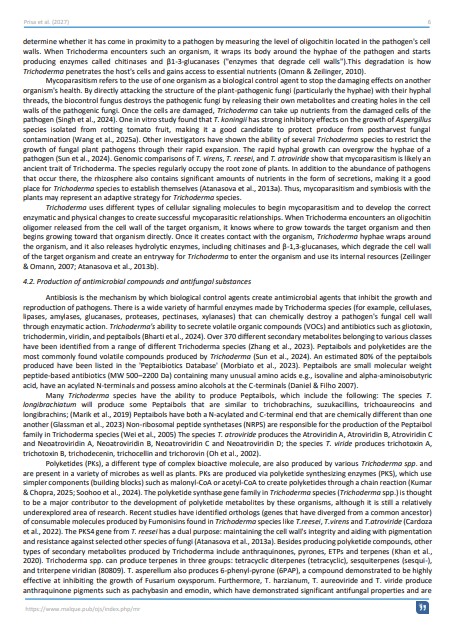
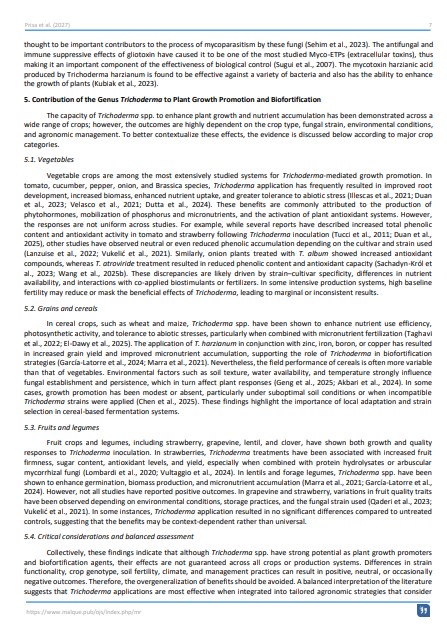
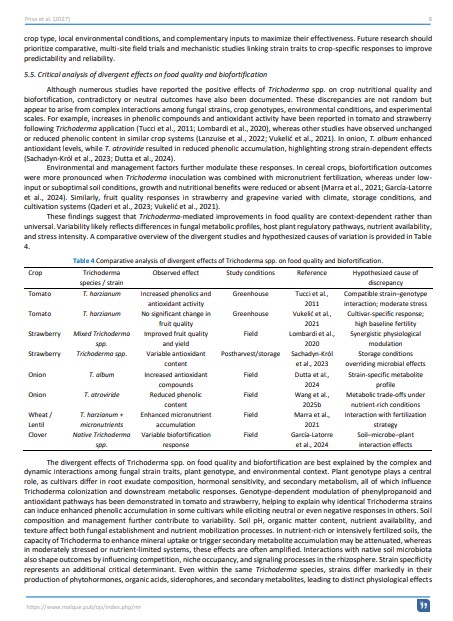
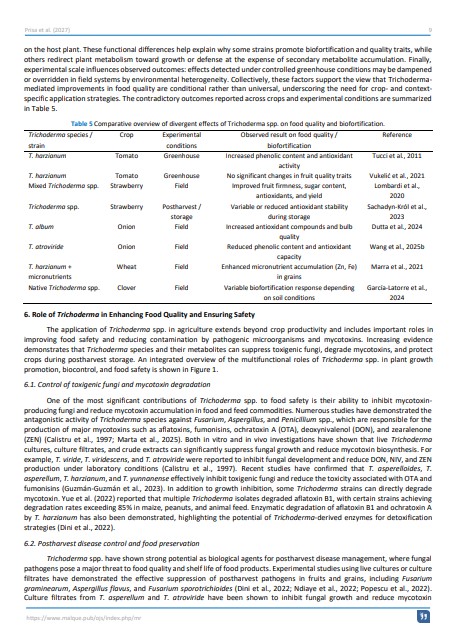
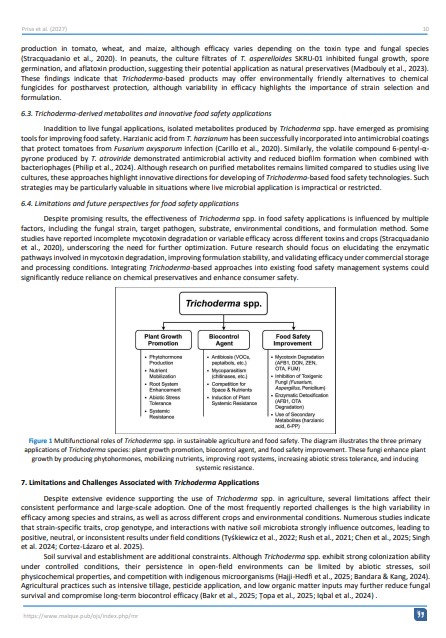
- Abstract The genus Trichoderma comprises one of the most intensively studied groups of beneficial fungi in agriculture due to its ability to suppress plant pathogens while simultaneously promoting plant growth. In recent years, increasing restrictions on chemical pesticides, rising climate-related stresses, and the demand for sustainable food production have accelerated interest in Trichoderma-based solutions. Advances in molecular biology, genomics, and metabolomics have revealed extensive functional diversity among Trichoderma species and strains, expanding their perceived role beyond classical biocontrol to include plant nutrition, stress tolerance, crop quality, and food safety. The objective of this review is to critically synthesize recent research on Trichoderma spp. by integrating biocontrol mechanisms, plant growth promotion and biofortification, and emerging roles in food quality and safety, while explicitly addressing the sources of variability that limit their predictable application in agricultural systems. Despite the growing body of literature, major gaps remain in understanding why similar Trichoderma species or strains produce divergent outcomes across crops, environments, and experimental scales. In particular, strain-specific functional traits, plant genotype, soil properties, and interactions with native microbiomes contribute to inconsistent results between in vitro studies, greenhouse trials, and field applications. This review examines three interconnected dimensions: (i) the principal mechanisms of biocontrol and their ecological modulation; (ii) plant growth promotion and nutrient biofortification across major crop groups; and (iii) contributions to food quality and safety, including postharvest disease control and mycotoxin mitigation. By comparing evidence across experimental scales and agricultural contexts, this article identifies key knowledge gaps, explains contradictory findings in the literature, and highlights why overgeneralization of Trichoderma benefits should be avoided. The review concludes by outlining research priorities needed to improve strain selection, context-aware application strategies, and the reliability of Trichoderma-based technologies in sustainable agriculture and food systems.
Keywords:
antagonistic fungi
sustainable agriculture
plant growth promoter
biofertilizer
pathogen control
Cited: Prisa, D., Jamal, A., & Spagnuolo, D. (2026). Enhancing plant growth and protection with <em>Trichoderma</em> species. Multidisciplinary Reviews, 10(2), 2027063. https://doi.org/10.31893/multirev.2027063
Link: https://10.31893/multirev.2027063
Condividi:
- Invia un link a un amico via e-mail (Si apre in una nuova finestra) E-mail
- Condividi su X (Si apre in una nuova finestra) X
- Stampa (Si apre in una nuova finestra) Stampa
- Condividi su WhatsApp (Si apre in una nuova finestra) WhatsApp
- Condividi su Facebook (Si apre in una nuova finestra) Facebook
- Condividi su Telegram (Si apre in una nuova finestra) Telegram
- Condividi su X (Si apre in una nuova finestra) X
- Condividi su Threads (Si apre in una nuova finestra) Threads
- Condividi su LinkedIn (Si apre in una nuova finestra) LinkedIn


