
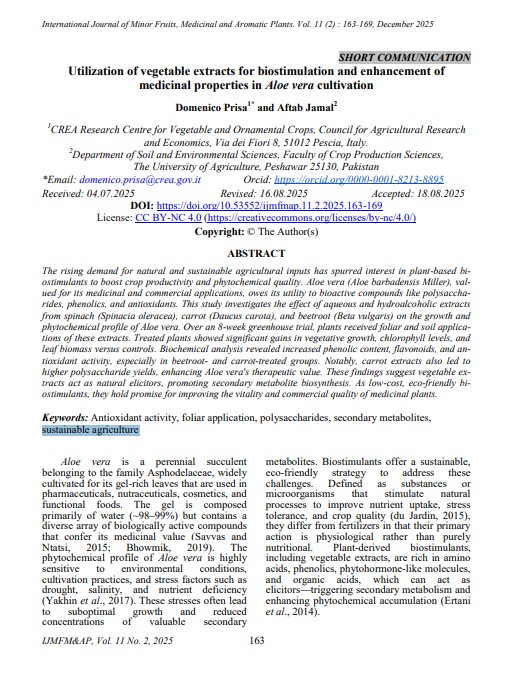
The rising demand for natural and sustainable agricultural inputs has spurred interest in plant-based biostimulants to boost crop productivity and phytochemical quality. Aloe vera (Aloe barbadensis Miller), valued for its medicinal and commercial applications, owes its utility to bioactive compounds like polysaccharides, phenolics, and antioxidants. This study investigates the effect of aqueous and hydroalcoholic extracts from spinach (Spinacia oleracea), carrot (Daucus carota), and beetroot (Beta vulgaris) on the growth and phytochemical profile of Aloe vera. Over an 8-week greenhouse trial, plants received foliar and soil applications of these extracts. Treated plants showed significant gains in vegetative growth, chlorophyll levels, and leaf biomass versus controls. Biochemical analysis revealed increased phenolic content, flavonoids, and antioxidant activity, especially in beetroot- and carrot-treated groups. Notably, carrot extracts also led to higher polysaccharide yields, enhancing Aloe vera's therapeutic value. These findings suggest vegetable extracts act as natural elicitors, promoting secondary metabolite biosynthesis. As low-cost, eco-friendly biostimulants, they hold promise for improving the vitality and commercial quality of medicinal plants.
Tag: Antioxidant activity
Pubblicazione Scopus: Achillea millefolium L.: A comprehensive review of its phytochemistry and pharmacological properties
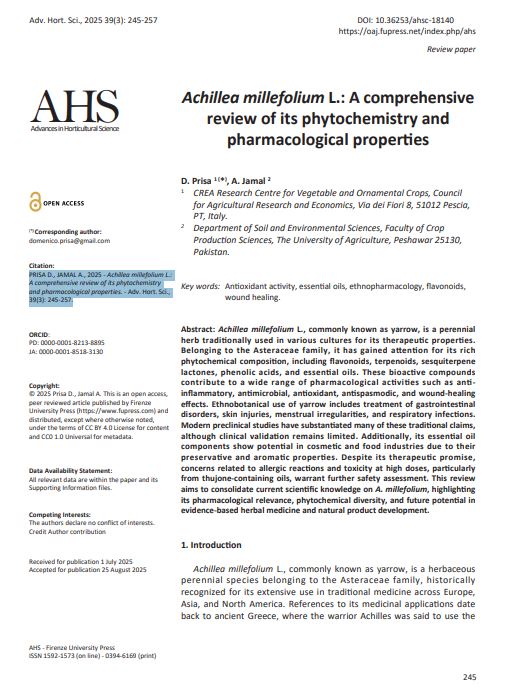
Achillea millefolium L., commonly known as yarrow, is a perennial herb traditionally used in various cultures for its therapeutic properties. Belonging to the Asteraceae family, it has gained attention for its rich phytochemical composition, including flavonoids, terpenoids, sesquiterpene lactones, phenolic acids, and essential oils. These bioactive compounds contribute to a wide range of pharmacological activities such as antiinflammatory, antimicrobial, antioxidant, antispasmodic, and woundhealing effects. Ethnobotanical use of yarrow includes treatment of gastrointestinal disorders, skin injuries, menstrual irregularities, and respiratory infections. Modern preclinical studies have substantiated many of these traditional claims, although clinical validation remains limited. Additionally, its essential oil components show potential in cosmetic and food industries due to their preservative and aromatic properties. Despite its therapeutic promise, concerns related to allergic reactions and toxicity at high doses, particularly from thujonecontaining oils, warrant further safety assessment. This review aims to consolidate current scientific knowledge on A. millefolium, highlighting its pharmacological relevance, phytochemical diversity, and future potential in evidencebased herbal medicine and natural product development.
 TECNICHE INNOVATIVE PER LA COLTIVAZIONE E DIFESA DELLE PIANTE, L'APICOLTURA, LA ZOOTECNIA E IL RISANAMENTO AMBIENTALE