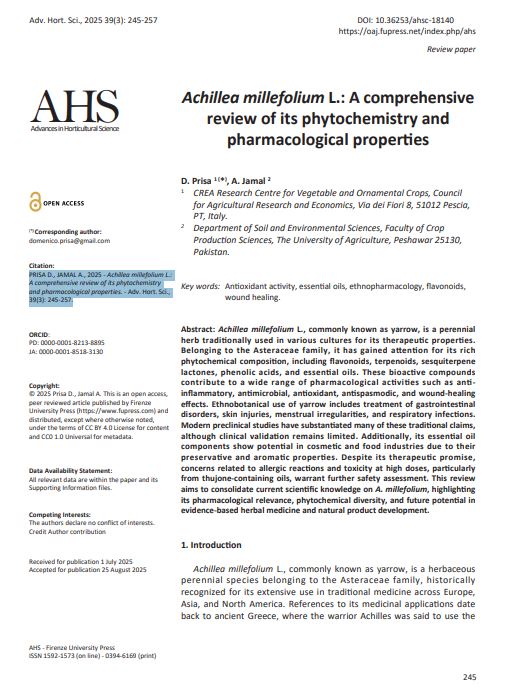
Achillea millefolium L., commonly known as yarrow, is a perennial herb traditionally used in various cultures for its therapeutic properties. Belonging to the Asteraceae family, it has gained attention for its rich phytochemical composition, including flavonoids, terpenoids, sesquiterpene lactones, phenolic acids, and essential oils. These bioactive compounds contribute to a wide range of pharmacological activities such as antiinflammatory, antimicrobial, antioxidant, antispasmodic, and woundhealing effects. Ethnobotanical use of yarrow includes treatment of gastrointestinal disorders, skin injuries, menstrual irregularities, and respiratory infections. Modern preclinical studies have substantiated many of these traditional claims, although clinical validation remains limited. Additionally, its essential oil components show potential in cosmetic and food industries due to their preservative and aromatic properties. Despite its therapeutic promise, concerns related to allergic reactions and toxicity at high doses, particularly from thujonecontaining oils, warrant further safety assessment. This review aims to consolidate current scientific knowledge on A. millefolium, highlighting its pharmacological relevance, phytochemical diversity, and future potential in evidencebased herbal medicine and natural product development.
Pensa e agisci come se ci fossi tu dall'altra parte

 TECNICHE INNOVATIVE PER LA COLTIVAZIONE E DIFESA DELLE PIANTE, L'APICOLTURA, LA ZOOTECNIA E IL RISANAMENTO AMBIENTALE