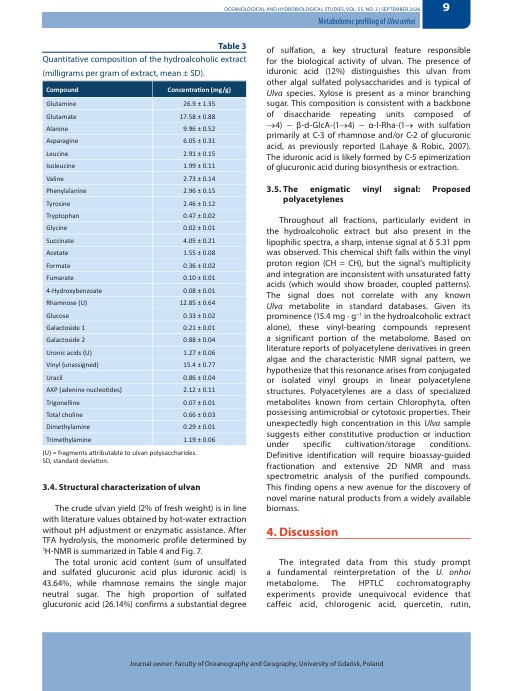

Autori: Ruggeri, L.M., Prisa, D. & Spagnuolo, D. (2026). Metabolomic profiling and structural characterization of Ulva onhoi by HPTLC and NMR spectroscopy. Oceanological and Hydrobiological Studies, Advance online publication. https://doi.org/10.26881/oahs-2026.1.23
Abstract
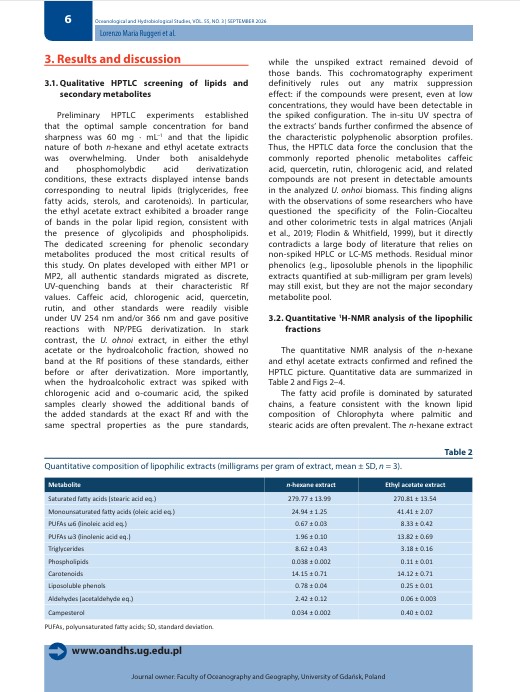
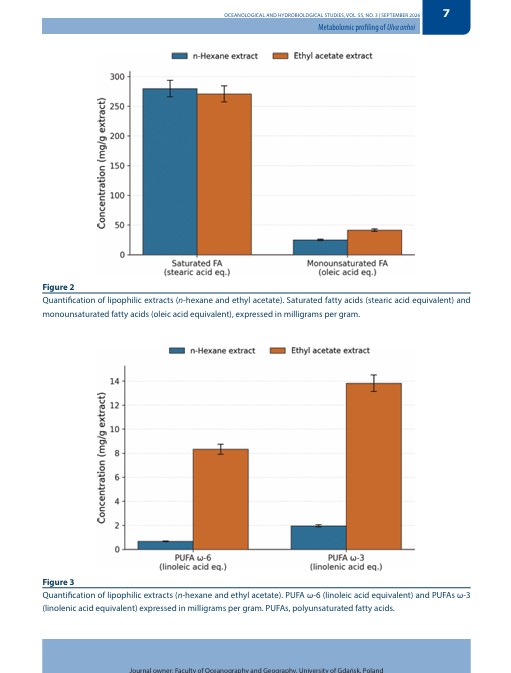
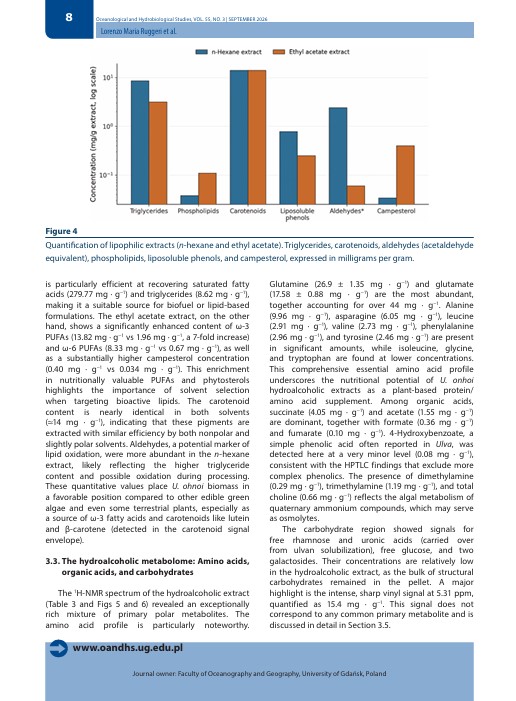
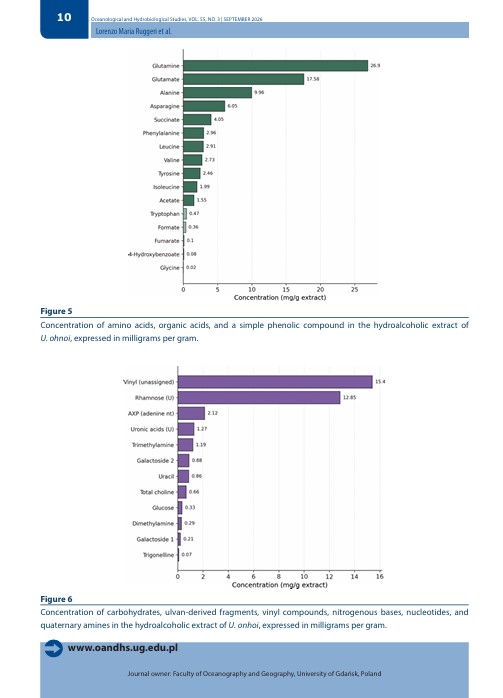
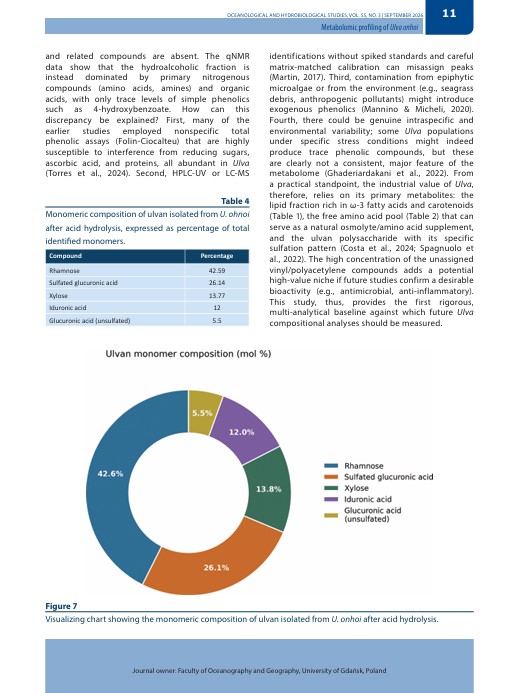
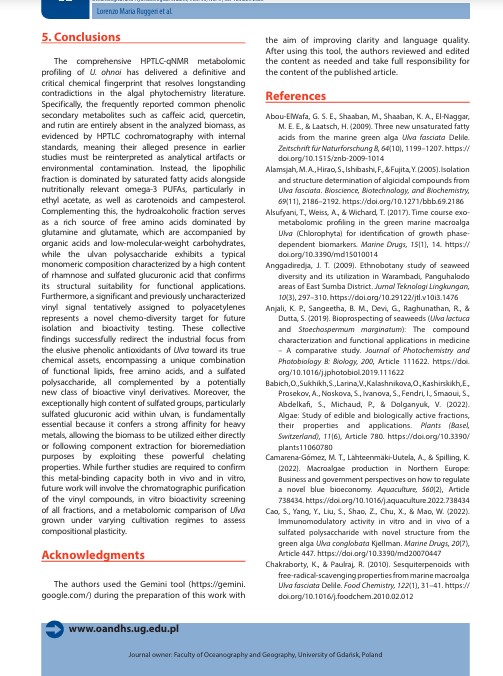
The green macroalga Ulva ohnoi is widely valued for its biotechnological potential, yet literature presents conflicting data regarding its secondary metabolome, frequently reporting phenolic compounds via nonspecific methods. To resolve these discrepancies, a multi-analytical strategy combining high-performance thin-layer chromatography (HPTLC), quantitative 1H-NMR, and sequential extraction was applied. HPTLC cochromatography unequivocally demonstrated the total absence of common phenolic secondary metabolites (such as caffeic acid, quercetin, and rutin), proving previous claims are likely analytical artifacts. Instead, NMR quantification revealed a matrix dominated by lipids and primary metabolites. The n-hexane extract contained high levels of saturated fatty acids (279.77 mg · g−1), while ethyl acetate yielded ω-3 fatty acids (13.82 mg · g−1), carotenoids (≈14 mg · g−1), and campesterol. The hydroalcoholic fraction showed a rich amino acid pool dominated by glutamine (26.9 mg · g−1) and glutamate (17.58 mg · g−1), alongside organic acids, carbohydrates, and a significant uncharacterized vinyl signal (15.4 mg · g−1). Furthermore, isolated ulvan comprised rhamnose (42.59%), glucuronic/sulfated glucuronic acid (31.64%), xylose (13.77%), and iduronic acid (12%). This study establishes a definitive metabolic fingerprint for U. ohnoi, redirecting its industrial focus away from elusive phenolics toward its true assets: functional lipids, free amino acids, ulvan polysaccharides, and a novel vinyl fraction.